
By Erik Anderson, Operations Manager
When you hear a company has built a new headquarters, the knee-jerk reaction is to assume it was built to provide nicer accommodations for its employees. While our new facility certainly creates a better place to work, that wasn’t the primary reason we built it.
We knew it needed a stronger purpose than simply replacing an aging campus. We had to answer a simple question: How will this make our buildings better for our customers? If we couldn’t point to measurable improvements in quality, efficiency and consistency, there wasn’t much reason to build it at all.
The new headquarters wasn’t just an investment in bricks and mortar. It became an opportunity to rethink every aspect of how we build, from the way we manufacture components and communicate between departments to how we package materials, support our builders and continuously improve the finished product that arrives at the building site.
The building itself is simply the most visible example of that effort. The real story is how a commitment to continuous improvement is helping us build a better Wick building, one process at a time.
Applying continuous improvement to our facility
As Wick’s Operations Manager, I’m responsible for everything that happens after a building leaves the drawing board and before it reaches one of our Wick In-House Crews or Wick Authorized Builder’s Crews.
That includes manufacturing the building components, coordinating with engineering and purchasing, and making sure the right materials are available at the right time. It’s also my responsibility to look for ways to improve those processes every single day. That’s the “continuous improvement” mindset we wanted our new facility to support.
Our previous manufacturing campus had served Wick well for many years, but it had evolved over time into a collection of separate buildings spread across more than two dozen acres. Departments were isolated from one another, materials traveled long distances through the campus, and communication often required employees to physically drive from one building to another.
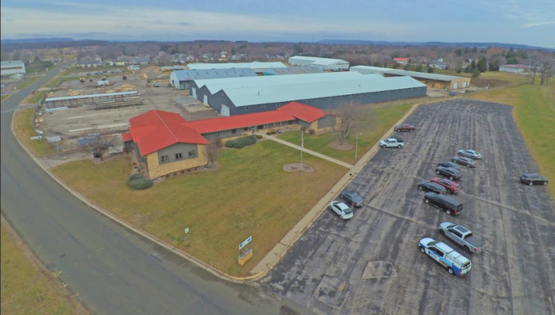
The old Wick campus with multiple buildings.
There was nothing inherently wrong with that arrangement. It reflected decades of growth. But if we wanted to keep improving, we needed a facility designed around how we operate in the current environment.
Bringing everyone under one roof allowed us to:
- Shorten the distance materials travel through the plant
- Improve communication between departments
- Create a more collaborative working environment
The result isn’t simply a better facility. It’s a better way to build.
How better processes build better buildings
Every Wick building follows a two-step construction:
1. The components are manufactured in our Mazomanie, WI facility, and then shipped to the building site.
2. The building is constructed by one of our Wick In-House Crews or Wick Authorized Builder’s Crews.
Here are several examples of how the new facility became the catalyst for a number of quality improvements to that process:
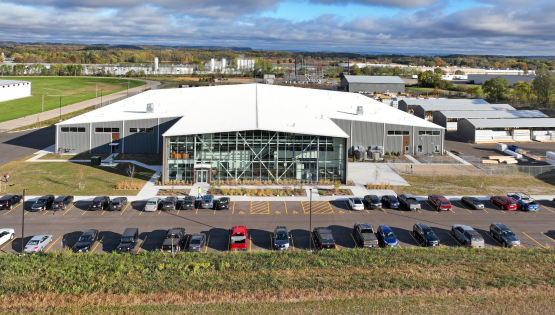
Exterior view of new Wick Buildings facility.
Delivering “fresher” building packages
Building materials don’t get better sitting in storage. Our goal is to manufacture complete building packages, move them efficiently through our facility, and get them on a truck as quickly as possible. We want our builders receiving what I like to call a “fresh” building package that’s ready to be installed.
Building more under controlled conditions
Whenever we can manufacture components in our facility instead of in the field, we improve consistency. Whether it’s trusses built on precision equipment or steel produced in our controlled manufacturing environment, we’re able to deliver tighter tolerances and more consistent quality before those materials ever reach your building site.
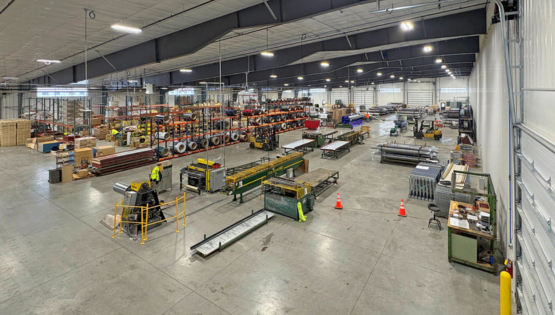
On the manufacturing floor.
Packaging materials to make construction easier
Quality doesn’t stop when a component leaves our production line. We’re continually improving the way building packages are organized and shipped so our builders can find what they need faster, spend less time sorting materials, and more time building.
Listening to our builders and acting on their feedback
Our builders are the next people to touch the product after it leaves the facility, so they’re often the first to spot opportunities for improvement. We actively ask for their feedback, then use it to improve everything from how we package lumber and steel to how our trim is manufactured and delivered.
Using AI to spend more time on quality
AI is becoming another tool for continuous improvement. By automating scheduling, reporting and other repetitive administrative work, we’re giving our supervisors and subject matter experts more time where they create the most value: on the production floor, improving quality and helping our builders deliver a better finished product.
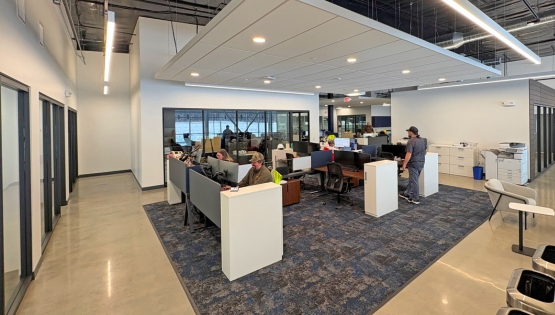
More collaborative work environment.
Quality standards should never stand still
One of the things I appreciate most is hearing from builders and customers who have worked with other manufacturers. They often tell us they’re surprised by the quality of the building package they receive from Wick.
That’s something we’re proud of, but it’s not something we’re willing to take for granted.
Quality starts with the materials themselves. We use lumber that meets or exceeds machine-graded standards, manufacture our own steel panels and trims under controlled conditions, and engineer every building package to meet the high standards our builders expect. Those decisions create a solid foundation before a building ever reaches the jobsite.
Just as important, though, is staying connected to the people using our product.
Our builders are our eyes and ears in the field. They know what works, what could work better, and where we have opportunities to improve. We also survey our customers because their experience matters just as much as ours. If we’re not listening, we’re not improving.
Finally, we believe quality should be measurable.
It’s easy for any company to say they build a quality product. We’d rather hold ourselves accountable with measurable goals. We’ve already reduced complaints by 50%, and we’re working toward cutting them in half again. Those aren’t just numbers on a report. They’re evidence that continuous improvement is producing better results for our builders and the customers they serve.
Building on a tradition of quality
John Wick built this company on the idea that quality should never be compromised. Seventy years later, that philosophy hasn’t changed, even though our surroundings have.
The new headquarters isn’t the finish line. It’s another step in an ongoing commitment to improve every process, every shipment and every building package that leaves our facility.
Because at the end of the day, our success isn’t measured by the building we work in. It’s measured by the building we help you build.


